

Nock On High-Performance Release Lube
- In stock, ready to ship
- Backordered, shipping soon
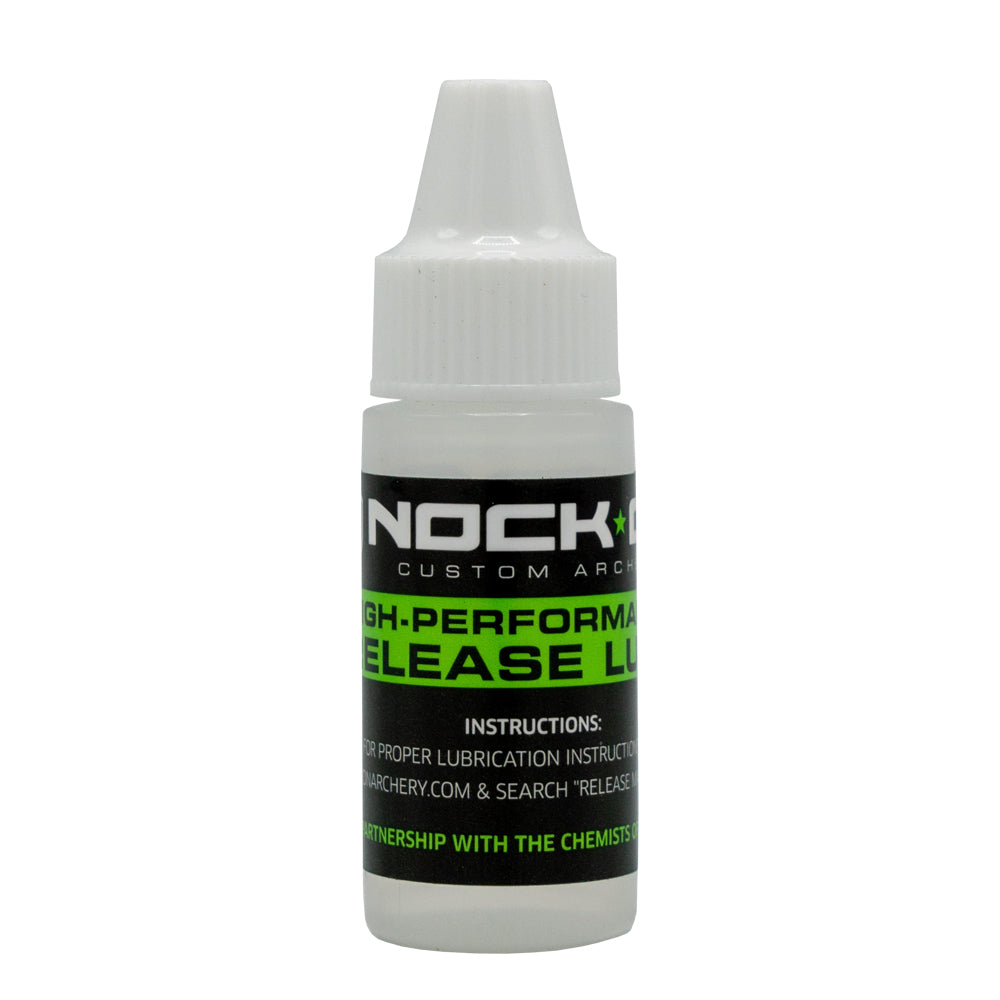
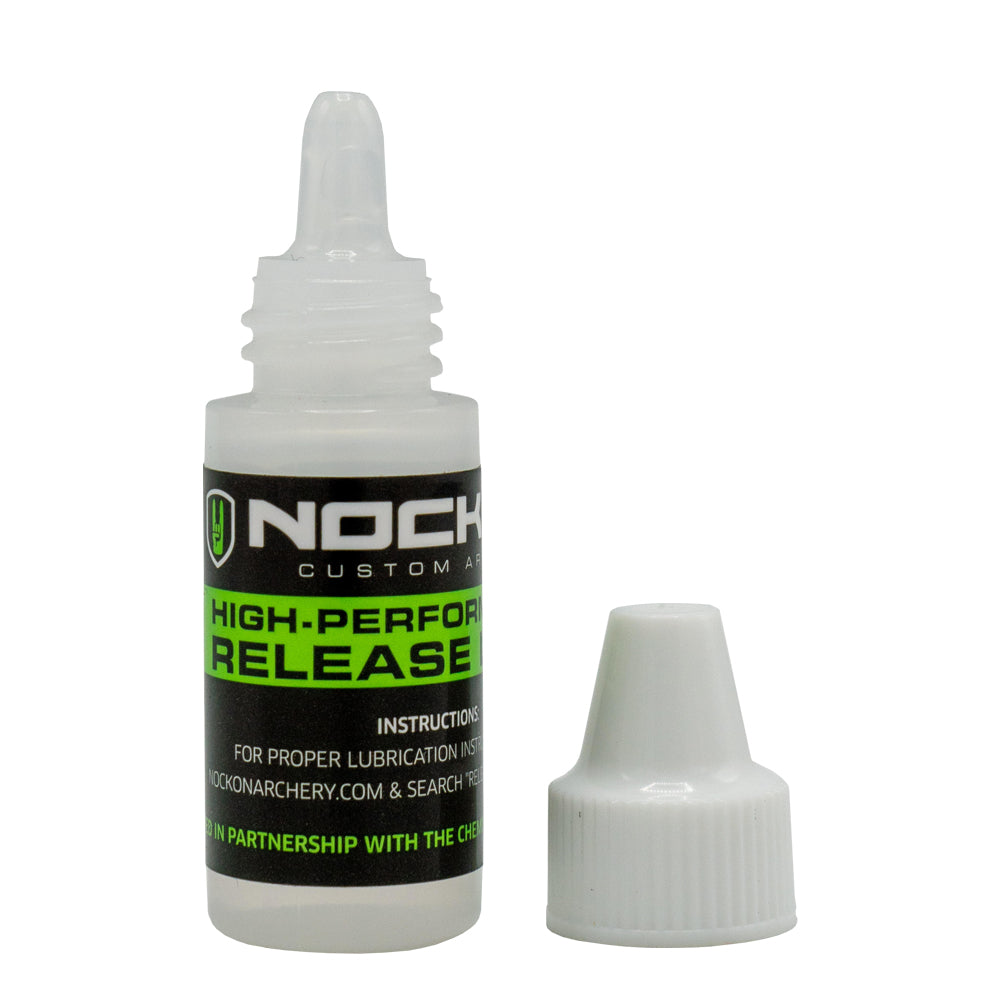
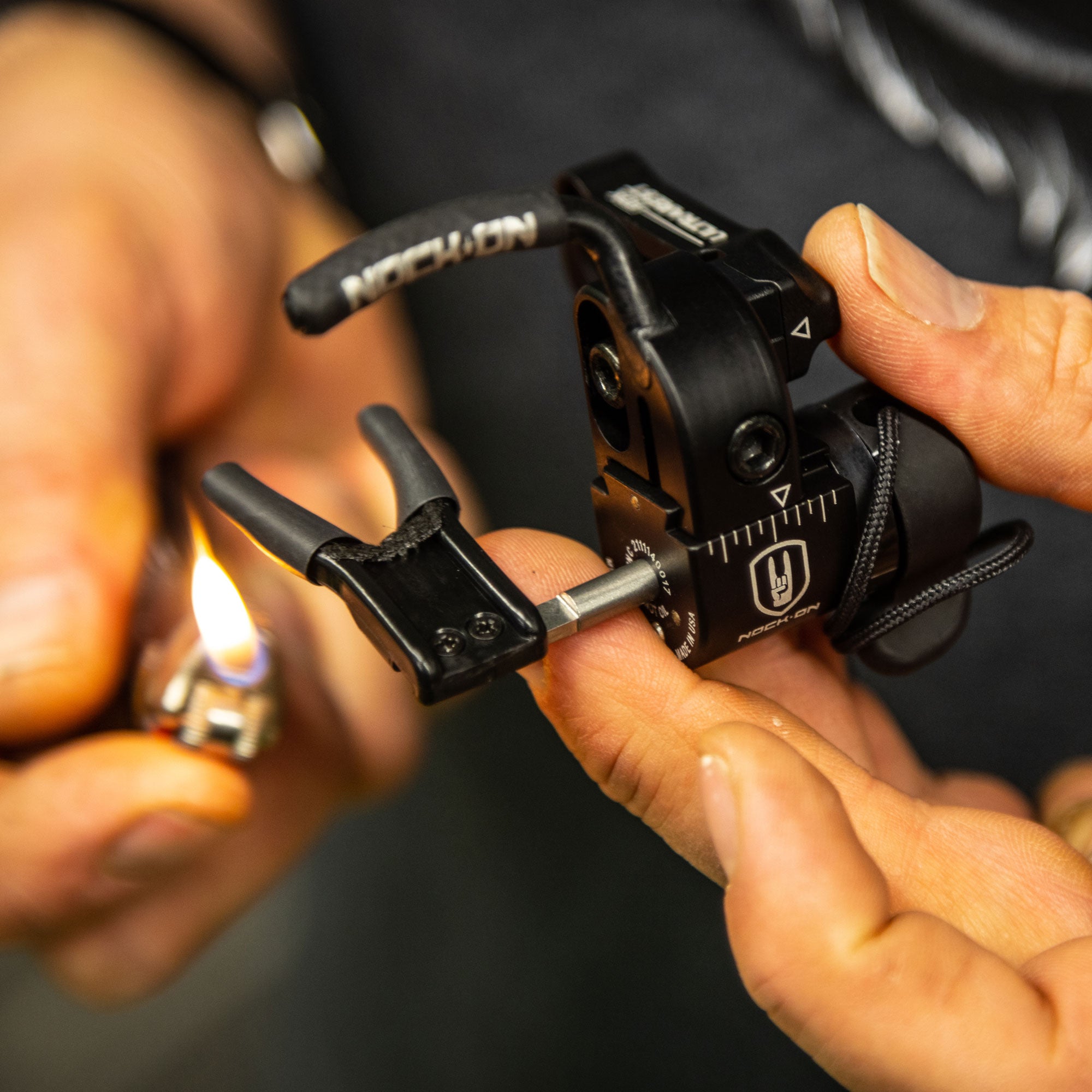
The Nock On High Performance Release Lube keeps your releases firing crisp and smooth with a proprietary formula designed to eliminate friction, prevent corrosion, and stop debris from building up inside your release’s internals. One drop in the right place is all it takes.
The formula protects against future contamination, so your release keeps performing like it did out of the box. Compatible with the full Nock On release lineup, this archery release lube doubles as a D-loop conditioner that prevents dry rot and extends lifespan.
Keep a bottle in your bow case and one in your shop. A few seconds of release aid maintenance every few hundred shots beats sending your releases back to Carter for corroded internals.
Core Benefits of the Nock On Release Lube
- Proprietary Formula: Eliminates friction, prevents corrosion, and stops debris buildup without attracting dirt like petroleum-based oils do
- One-Drop Application: A single drop every few hundred shots, or after wet and dirty conditions, keeps your bow release firing at factory specs
- D-Loop Conditioning: Doubles as a D-loop treatment that prevents dry rot and helps your loop seat consistently in the hook for improved accuracy
- Full Nock On Compatibility: Works with every release in the lineup, including the Nock 2 It, 2 Smooth, Silverback Plus, and Back Strap
Nock On Release Lube Features
Proprietary Anti-Friction Formula
Most archers reach for whatever oil they’ve got on hand: gun oil, 3-in-1, motor oil. The problem with petroleum-based lubricants is that they attract dirt, grime, and moisture into your release’s internals. Over time, that buildup changes how your sear breaks, introduces inconsistency, and eventually corrodes the components.
The Nock On archery release lube uses a proprietary formula that eliminates friction without leaving a tacky residue. It prevents debris from accumulating on internal surfaces and protects against corrosion from sweat, humidity, and temperature swings.
Corrosion Prevention
Condensation and perspiration are when your release’s internals take the most damage. Moving from a heated truck to a cold treestand, or sweating through a summer 3D shoot, creates moisture that leads to corrosion on internal components.
Apply this release aid lubricant before those conditions set in. The formula protects internal metal surfaces from moisture, which means no rust forms on the components that control your shot break. Ignore this long enough, and you’re looking at a full internal replacement through Carter.
D-Loop Conditioning
The same formula that protects your release internals also extends the life of your D-loop material. A light application prevents the loop from drying out and cracking, adding longevity to a component most archers replace too often.
A conditioned D-loop seats more consistently in your release hook. On releases with larger hooks, the loop can shift position depending on finger pressure. A treated loop slides into the same spot every time, which means a cleaner release and tighter groups downrange.
How to Apply Release Lube by Release Type
Each Nock On release has a specific lubrication process, and proper release aid maintenance follows the same pattern across all models. The general rule is air, lube, air: blow out debris first, apply one drop of release lube, then flush with air to distribute.
Nock 2 It
- Close the release and force compressed air through the small opening on top of the jaw, blowing from front to back
- Fire the release, then blow air through the opening at the bottom of the cocking leather from back to front
- Add one drop at the back of the mechanism, close the release, then add one drop at the front jaw opening
- Force air through from front to back, fire, then blow from back to front
2 Smooth Hinge Release
- Clean any visible debris from the moons and head with a Q-tip or paper towel
- Add one small drop to the pivoting point where the head connects to the casing
- Work the head back and forth several times to distribute the lube
Silverback Plus Series
- Open the jaw by pulling on a piece of D-loop material without your finger on the safety
- Pull the jaw completely open
- Add one drop to the back side of the hook
- Close the release and fire it several times to distribute
Back Strap Release
- Disengage the safety by squeezing the trigger
- Pull to open the jaw fully
- Add one drop at the back of the jaw where the sear edge sits
- Fire several times to work the lube through the mechanism
Release Lube Technical Specifications
- Formula: Proprietary blend
- Application Rate: One drop per location every few hundred shots, or after exposure to moisture, dirt, or temperature extremes
- Compatible Releases: Nock 2 It, Nock 2 It Mini, 2 Smooth, Silverback Plus, Silverback Plus Mini, Back Strap
- Additional Use: D-loop conditioning and preservation
Release Lube Performance
A single drop of this archery release lube in the right spot at the right interval is the difference between consistent shot breaks and a trip back to the store. Apply it every few hundred shots or after any session in wet, dirty, or extreme-temperature conditions. Keep up with it, and your releases will keep firing crisp and smooth.
Frequently Asked Questions About the Nock On Release Lube
How often do I need to apply release lube?
Apply one drop every few hundred shots or after your release has been exposed to wet, dirty, or extreme-temperature conditions. If you’re hunting in rain or transitioning between warm and cold environments (truck to treestand, for example), apply it before your next session. A single drop at each lubrication point is all you need.
Can I use gun oil or 3-in-1 oil on my release instead?
You can, but you’ll create more problems than you solve. Petroleum-based oils and thick lubricants attract dirt and debris into your release’s internals, which changes how the mechanism functions over time. Dry lubricants like graphite work in a pinch but don’t offer corrosion protection.
The Nock On release lube uses a synthetic formula that eliminates friction, prevents contamination, and protects against corrosion without attracting debris. The archery forum consensus backs this up: wet oils gum up, graphite is temporary, and purpose-built release aid lube is the way to go.
Does the release lube work on non-Nock On releases?
The step-by-step instructions above are specific to Nock On releases. If you’re shooting another brand of bow release, the same general principle applies: clean with compressed air, apply one drop of lubricant to moving parts like the jaw pivot and sear contact point, then flush with air again. Check your release manufacturer’s maintenance guide for model-specific steps.
Will this fix a sticky or inconsistent release?
If your release feels sticky, gritty, or inconsistent, start with the air-lube-air process: blow out debris with compressed air, apply one drop, then flush with air again. In most cases, this brings the release back to factory feel.
If you’re seeing visible rust or corrosion on the internals, the lube won’t fix existing damage. At that point, contact Carter directly for an internal component replacement. The lube prevents that situation from happening in the first place.
How does this help my D-loop?
A light coating prevents D-loop material from drying out and cracking, which extends its usable life. A conditioned loop seats more consistently in your release hook.
If your loop shifts position in a larger hook depending on finger pressure, a treated loop slides into the same place every time. That consistency translates directly to accuracy, shot after shot.
Can I over-apply the release lube?
Stick to one drop per lubrication point. More isn’t better. Excess lube can pool inside the mechanism, attract debris, and do the opposite of what you want. One drop is all it takes to protect and lubricate each contact surface.
Follow the air-lube-air process and let compressed air distribute the product evenly through the mechanism.
What happens if I don’t lubricate my releases?
Sweat, dust, and moisture build up on internal components over time. That buildup creates friction that changes your shot break, makes your release feel inconsistent, and eventually causes corrosion. Once rust sets into the internals, it’s a Carter service call and a replacement of corroded parts.
A few seconds of maintenance every few hundred shots prevents all of it.