
Riddance Stabilizer — Long Rod
- In stock, ready to ship
- Backordered, shipping soon
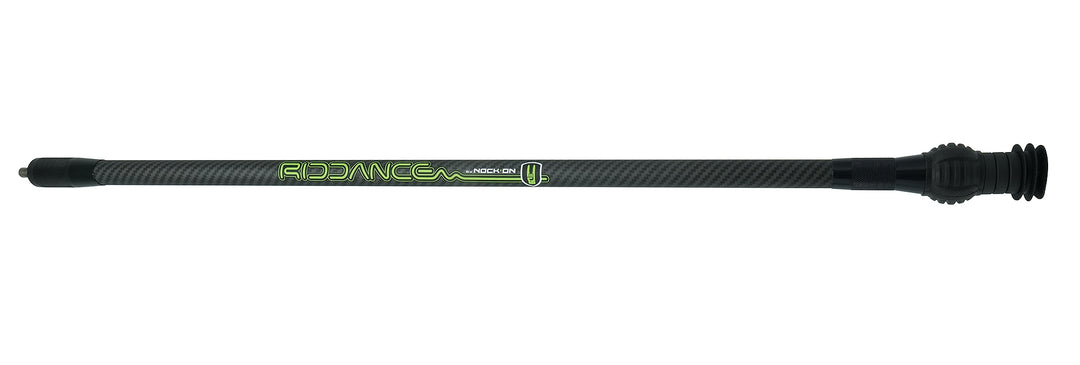
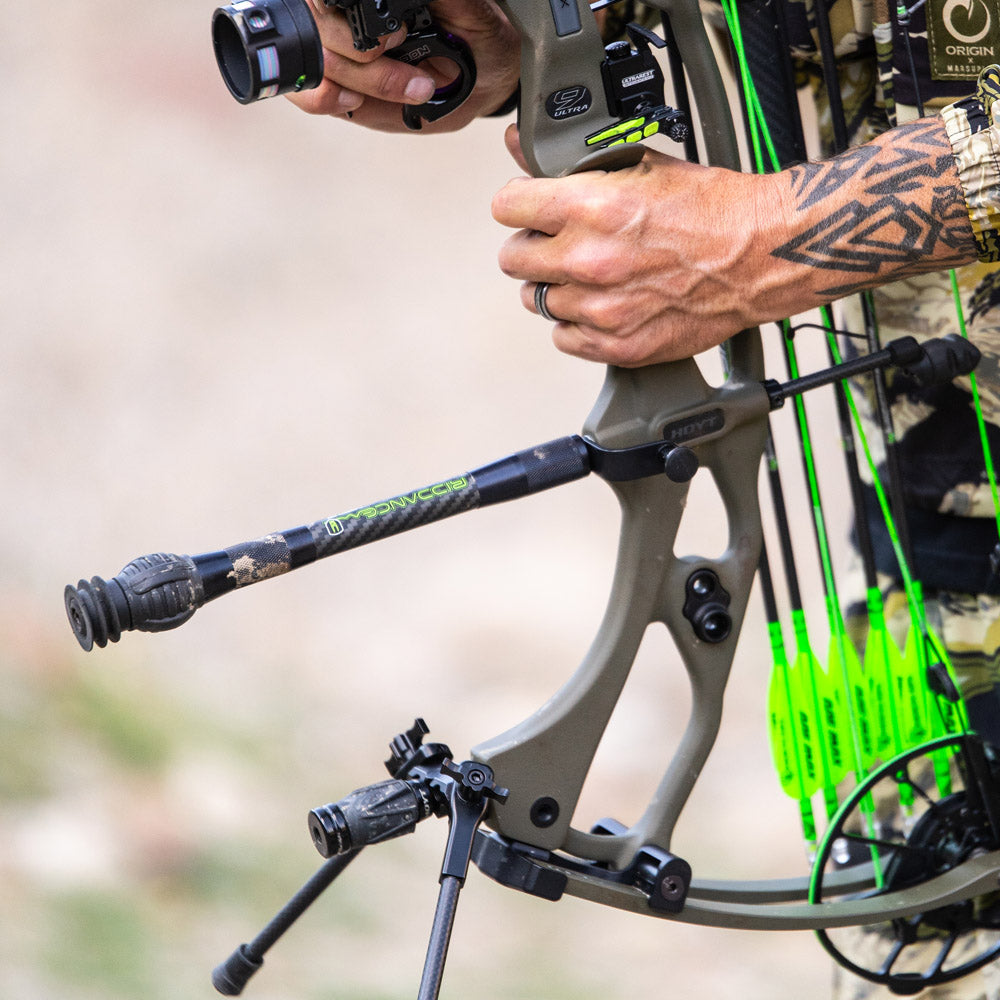
The Nock On Riddance Long Rod does one job: kill the vibration and noise that travel back through your bow during the shot. After years of testing material combinations, John Dudley landed on a dual-material bar paired with a licensed Doinker A-Bomb dampener and AAE containment collar, all working together to dissipate energy before it ever reaches your grip hand.
The Riddance long rod target stabilizer comes in 27-inch and 30-inch lengths. Both are measured collar to collar, with three additional inches of total length added by the Doinker and weight stack out of the box. The 27-inch rod runs 30 inches overall, and the 30-inch rod runs 33 inches overall. Each ships with three one-ounce Cerakoted stainless steel weights.
John Dudley credits the longer rod with the stability that defined his competitive years. The extra length steadies pin float, exposes any torque your bow hand is putting into the system, and gives you a visual cue for correcting form before it costs you points.
Core Benefits of the Riddance Long Rod Stabilizer
- Vibration and Noise Elimination: Two proprietary bar materials target the specific frequencies your bow generates during the shot, dissipating energy before it reaches your hand
- Steadier Pin Hold: The length and weight up front reduce pin float so you can settle into your aim and execute a cleaner shot
- Torque Detection Built In: A long rod shows you exactly what your bow hand is doing. If you’re torquing the grip, you’ll see the tip drift before you ever look at your group
- Two Length Options: 27-inch rod (30 inches total out of the box) and 30-inch rod (33 inches total out of the box) for hunting-target crossover setups or full competition rigs
Riddance Long Rod Stabilizer Features
Proprietary Dual-Material Bar
The bar contains two proprietary materials blended together to address two specific frequency ranges produced during a bow’s shot cycle. The handle, limbs, cam system, and strings each generate different vibrations at the moment of release. These materials work together to capture and dissipate that energy before it reaches your grip hand.
John Dudley tested the stiffness and dampening balance over several years before settling on this blend. The bar is stiff enough to hold a fully weighted system without flex, but not so rigid that vibration shoots back through the riser or moves your sight picture.
Doinker A-Bomb Dampener
Each Riddance long rod ships with a licensed Doinker A-Bomb dampener. John Dudley shot the Doinker A-Bomb on his most reliable target setups for years before licensing it for the Riddance line.
The A-Bomb absorbs any vibration the bar materials don’t capture, which John Dudley has called critical for the dead-in-hand feel archers report after the first shot.
AAE Containment and Collar System
The end collars use AAE’s collaring system, which John Dudley calls a bulletproof lockdown for the weight stack and dampener. The connection holds the configuration no matter how much weight you stack on the end, so the system stays tight whether you’re running a stock setup or a fully loaded competition rig.
Length as a Training Indicator
John Dudley uses a long rod as a built-in coaching tool. When your bow hand is neutral, the tip of the rod tracks straight in front of you. The second you torque the grip, the tip drifts left or right before you can hide the error in your groups.
This is the same feedback loop John Dudley relied on during his competitive years. Watch the tip, correct your hand position, and you’ve fixed a flaw without needing to shoot a dozen ends to figure it out.
Which Long Rod Length Is Right for You
The 27-inch rod (30 inches total with dampener and weights) is the standard starting point. John Dudley recommends it for archers stepping up from short hunting stabilizers, for shooters who want a long-rod feel without a dramatic adjustment to their setup, and for hunting-target crossover bows.
The 30-inch rod (33 inches total) is the full competition length. It gives you maximum pin steadiness and the strongest torque indication, which is why John Dudley runs it during tax season and indoor target events.
Riddance Long Rod Technical Specifications
- Available Lengths: 27″ and 30″ (collar to collar)
- Total Length Out of Box: 30″ (27″ rod) and 33″ (30″ rod) with dampener and weight stack
- Bar Material: Two proprietary materials blended for frequency-specific dampening
- Dampener: Licensed Doinker A-Bomb
- Collar System: AAE containment collaring
- Included Weights: Three one-ounce Cerakoted stainless steel weights
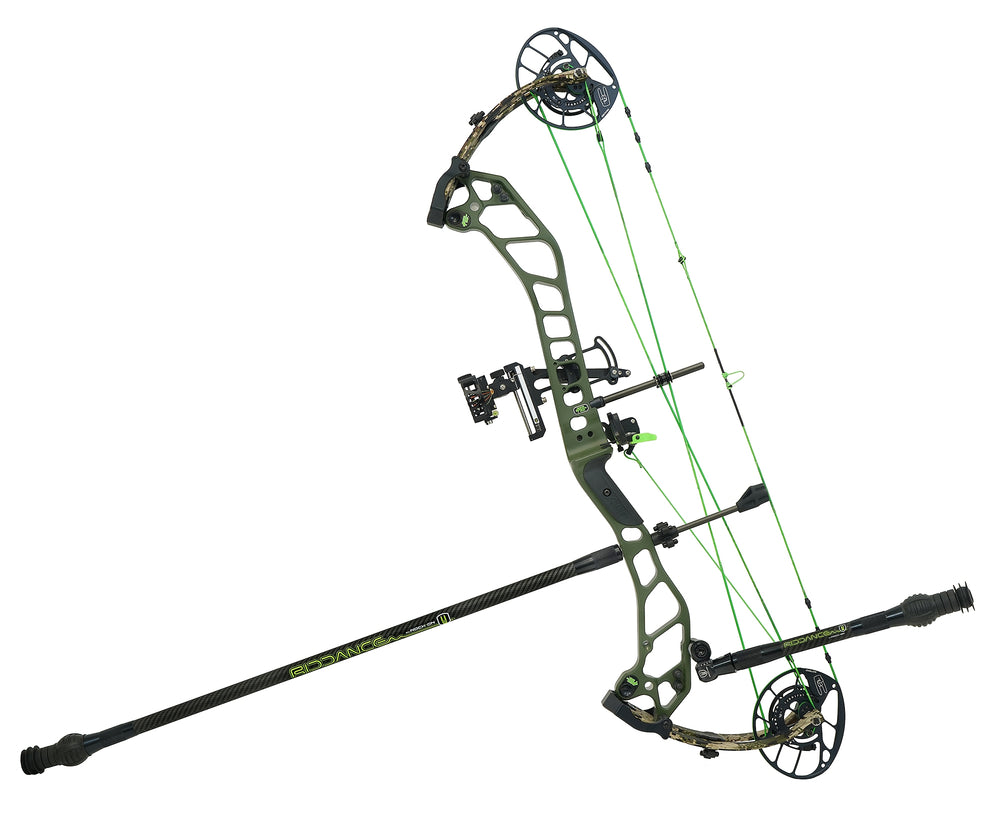
- Pairs With: Riddance Short Rod (8″ or 10″) for back-bar setups
- Additional Accessories: Sidebar bracket, additional weights, and short rods sold separately
Riddance Long Rod Stabilizer Performance
This bow stabilizer gives you the stability that wins targets and the dampening that quiets bow noise on the same shot. Pair the 27-inch with an eight-inch Short Rod for a balanced 3D or hunting-target rig, or run the 30-inch with a 10-inch Short Rod and a Gripper sidebar bracket for a full competition setup. Either way, the dual-material bar, Doinker A-Bomb, and AAE collar system are built to say good riddance to vibration the moment you press the trigger.
Frequently Asked Questions About the Riddance Long Rod Stabilizer
How does the Riddance long rod compare to other target stabilizers?
The two proprietary materials in the bar are blended to target the specific frequencies a compound bow generates during the shot. The dual-material approach, combined with the Doinker A-Bomb dampener and AAE collar, creates a system that dissipates vibration before it reaches your hand.
Archers who’ve switched to the Riddance long rod consistently report a quieter shot and a dead-in-hand feel within the first few arrows. Customer reviews on archery forums consistently mention pairing the 27-inch front with a 10-inch back bar as a versatile combination for target, 3D, and hunting-target crossover work.
What’s the difference between the 27-inch and 30-inch long rod?
Both rods use the same bar materials, dampener, collar system, and weights. The 27-inch measures 30 inches total with the Doinker and weight stack installed, and the 30-inch measures 33 inches total.
The 27-inch is the better starting point if you’ve never shot a long stabilizer or if you’re stepping up from a hunting-length front rod. The 30-inch is the full competition length that John Dudley runs during indoor target and tournament events for maximum pin steadiness and the strongest torque indication.
Can the long rod work for hunting setups?
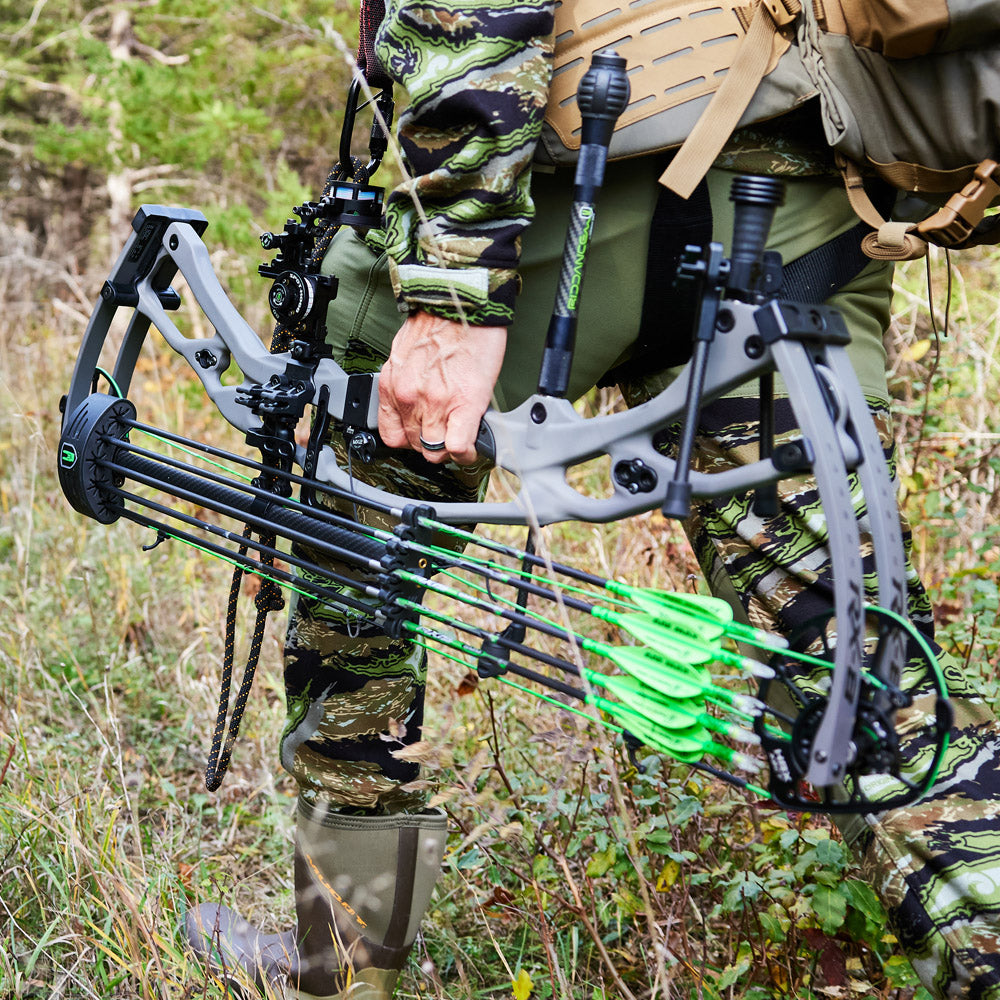
The 27-inch works on a hunting-target crossover bow if you don’t mind the extra length when carrying or in a blind. John Dudley typically swaps to a short rod for his pure hunting setup because a long rod gets in the way during stalks, in tree stands, and in tight blinds.
If you run one bow for both jobs, the 27-inch with a balanced weight load is the practical compromise. For pure hunting, the Riddance Short Rod is the better tool.
Do I need a back bar with the long rod?
You don’t have to run one, but most target archers add a back bar to balance the system. Pair the 27-inch or 30-inch front with an eight-inch or 10-inch Riddance Short Rod on a Gripper sidebar bracket to offset the forward weight and give the bow a neutral hold at full draw.
For 3D and indoor target, the front-and-back combination is the standard setup. For pure hunting, a back bar adds weight and snag points that get in the way more than they help.
How much weight can I add to the long rod?
Three one-ounce Cerakoted weights come standard. Most target archers run between six and 12 ounces total on a long rod, depending on draw weight, strength, and shooting style. Start with the stock weight and add or remove based on how the bow holds and how your groups respond.
John Dudley warns against overloading weight to chase a still pin. If you’re compressing your front shoulder or hitching your hips to hold the bow steady, the technique breakdown costs more than the stability gain. Keep weight closer to the riser when you can.
Will a longer stabilizer actually tighten my groups?
Length affects your shooting in two ways: it steadies pin float and shows any torque your bow hand is introducing into the system. A longer rod settles the sight picture faster, and the tip of the rod drifts left or right the second your grip goes off-neutral.
John Dudley credits longer rods with teaching him stability during his competitive years. Shoot through paper with the long rod installed, then with a minimal setup, and compare how the bow tunes. The proof shows up in the holes downrange.