

Spot Hogg Boonie Sight — 5 Pin — Picatinny Mount
- In stock, ready to ship
- Backordered, shipping soon
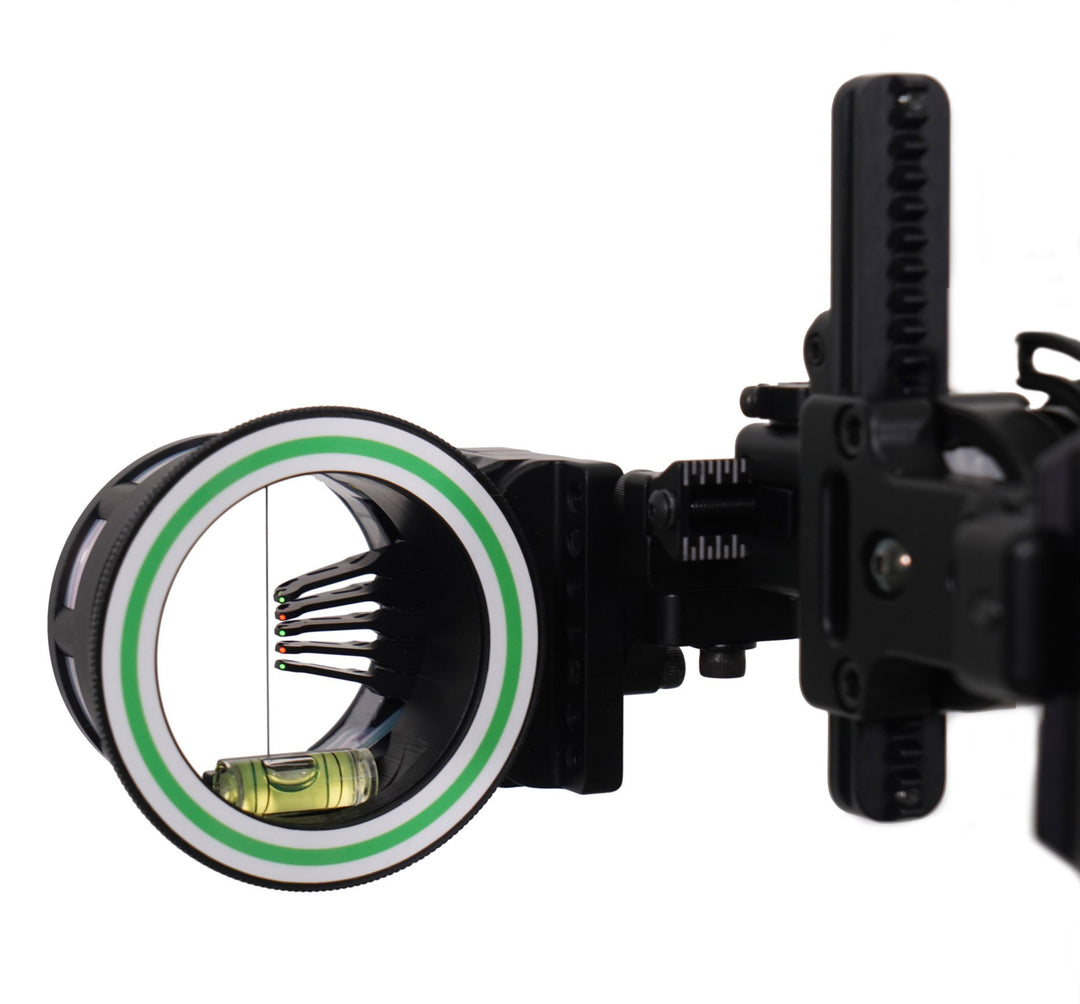
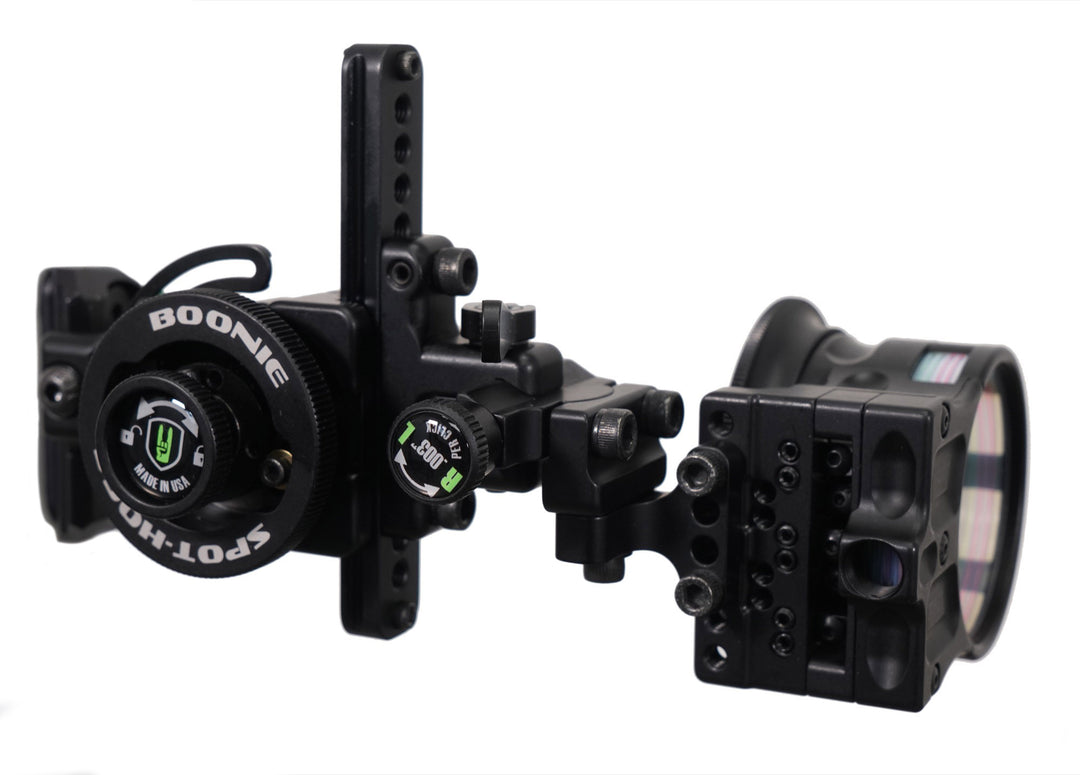
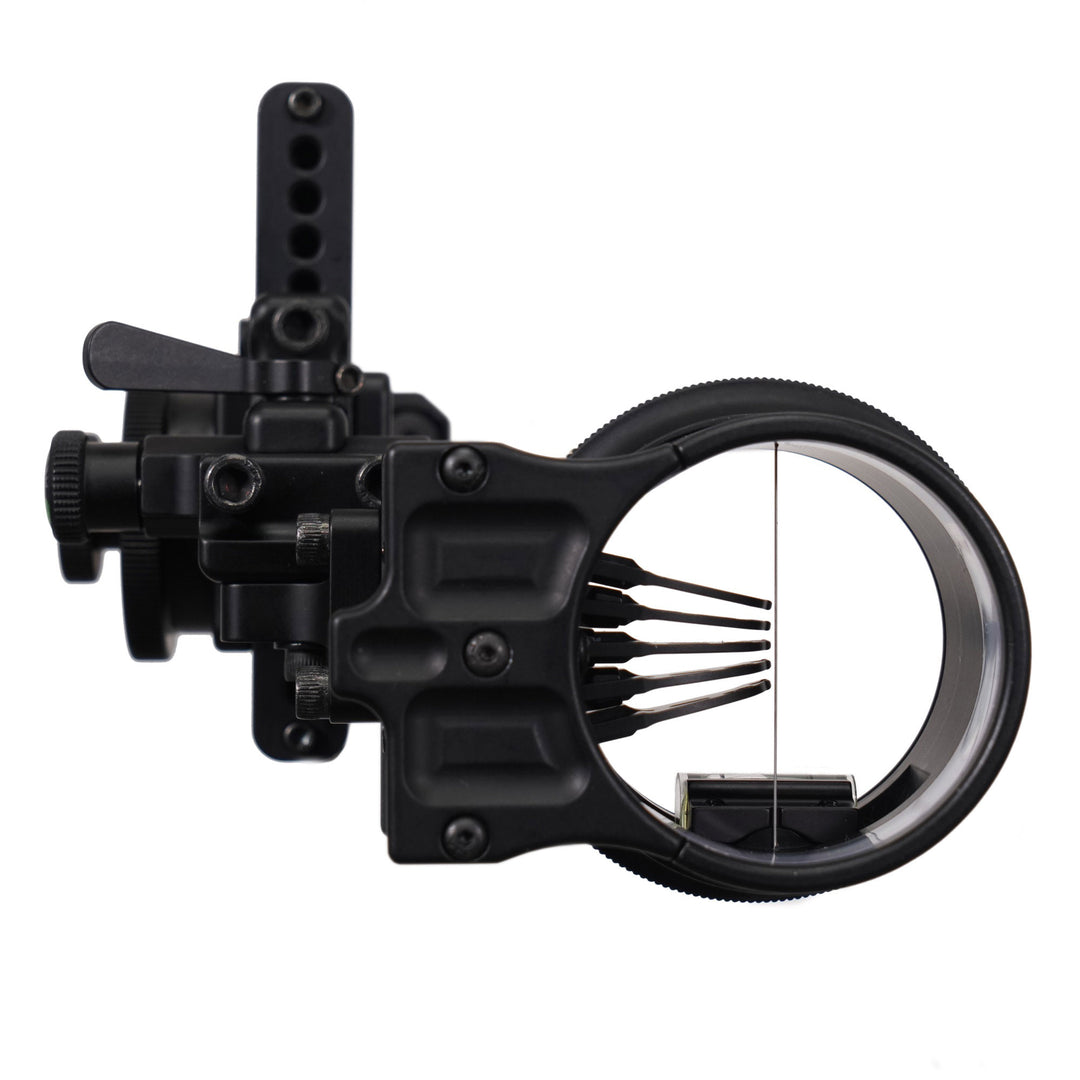
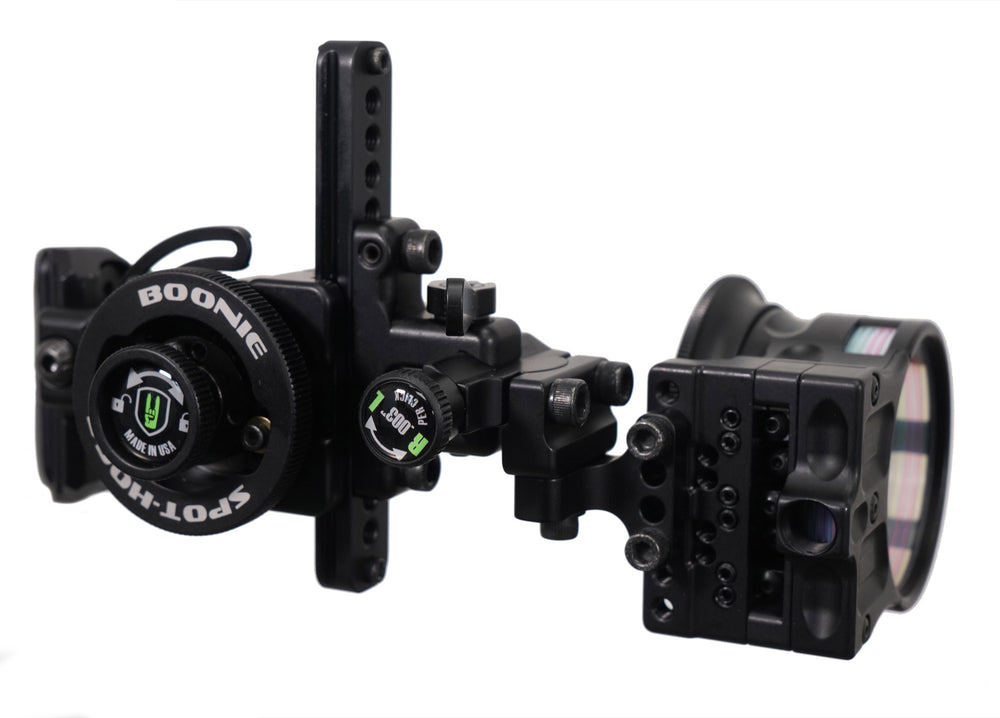
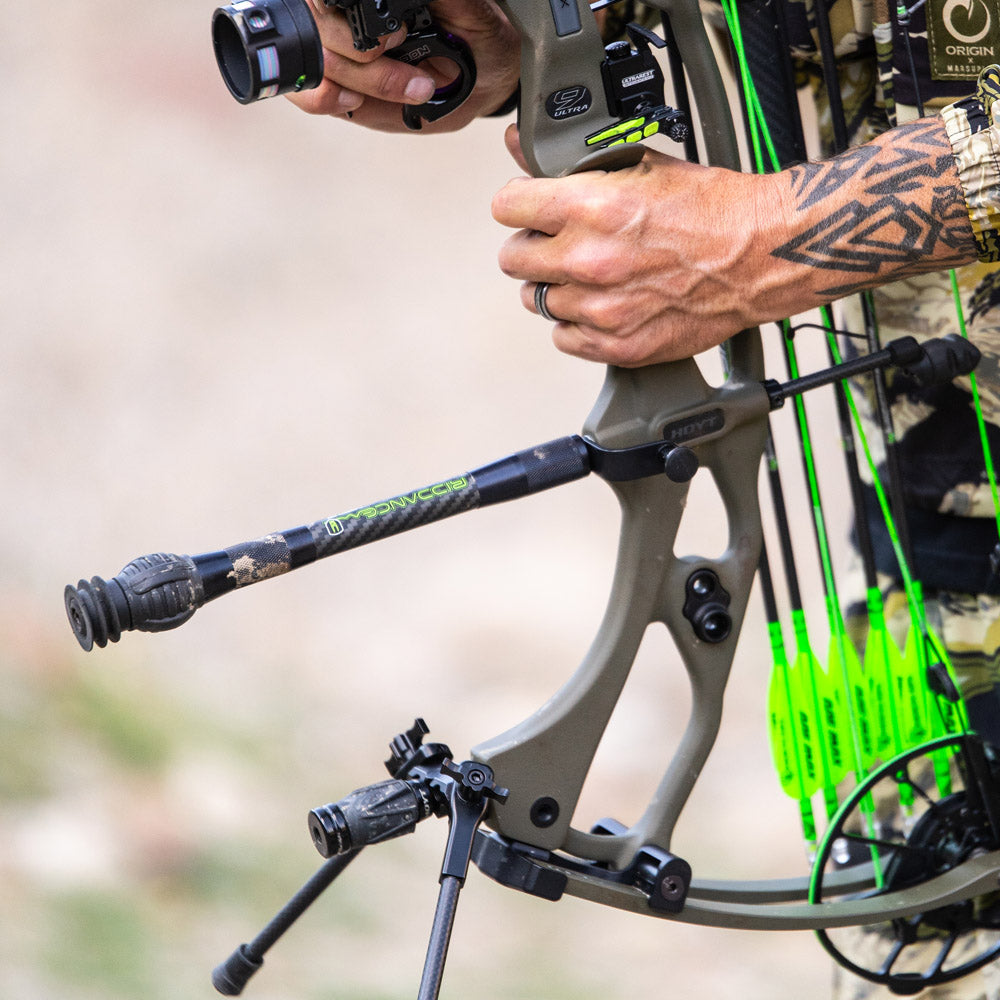
The Spot Hogg Boonie 5 Pin sight runs five fixed pins for fast pin selection in hunting situations, plus a bottom rover pin you can dial to exact yardage when the shot gives you time. The Picatinny mount attaches directly to the Pic rail on Hoyt and other flagship bows, pulling the scope tight to the riser for better balance and a cleaner sight picture.
This Boonie 5 Pin Picatinny sight ships in right-hand and left-hand configurations and comes with Spot Hogg’s Vertical Alignment Wire System, three MRT (Multi-Ring Technology) rings for peep alignment in different lighting conditions, three calibration tapes, and 29 sight tapes covering out to 100 yards. The 5 Pin MRT housing accepts .019″ pins for daylight visibility, and pin orientation runs more parallel than the 3 pin variant.
John Dudley positions the dog leg bracket to pull the scope close to the riser. That’s the goal whether you’re running a Pic rail Hoyt or another compound with a Picatinny mount. The closer the scope sits to the bow, the better it balances and the more dialed your sight picture feels at full draw.
Core Benefits of the Boonie 5 Pin Sight
- Five Fixed Pins Plus a Rover: Five .019″ pins ready to grab for fast hunting shots, plus the ability to dial the bottom pin to exact yardage when you have time
- Picatinny Direct Mount: Attaches to the Pic rail on Hoyt and other flagship bows without a separate mounting bar, sitting closer to the riser for tighter balance
- Roughly 10% Lighter Than Fast Eddie: Streamlined housing and Picatinny mount cut weight from the Spot Hogg slider lineup without giving up durability
- Tool-Less Windage and Elevation: Silent click micro-adjustments on windage and elevation, with second and third axis adjustment and direction indicators on the windage bar
Boonie 5 Pin Sight Features
Vertical Alignment Wire System and Bottom Rover Pin
The 5 Pin MRT housing uses Spot Hogg’s Vertical Alignment Wire System to keep pin tracking clean from top to bottom. The top four pins stay fixed at your chosen yardages, and the bottom pin doubles as a rover when you want to dial to an exact distance instead of stacking on a set pin.
John Dudley uses this kind of setup for hunting: range and dial when you have a few seconds, grab a pin and shoot when you don’t. The 5 pin keeps both options on the table.
Picatinny Direct Mount
The Picatinny mount bar attaches the sight directly to the Pic rail built into modern flagship compounds. No additional mounting bar, no extra screw, no slop.
Out of the package, the rail is positioned based on John Dudley’s typical Hoyt builds, which he sets up around his peep height and knocking point. If your peep or knocking point sits in a different spot, the dog leg bracket flips with two screws to reposition the sight closer or further from the riser. John Dudley’s preference is to pull the scope tight to the riser for the best balance.
MRT (Multi-Ring Technology) Housing
The 5 Pin MRT housing ships with three Multi-Ring Technology rings in different sizes, giving you custom peep alignment across light conditions. Pin orientation is more parallel on the 5 pin MRT than on the 3 pin variant, which is what most archers running multi-pin hunting setups want.
Each pin micro-adjusts with set screws so you can dial exact yardages instead of accepting whatever the factory gives you.
Tool-Less Windage and Elevation With Audible Clicks
The windage bar runs micro-adjustments with audible click feedback and laser-engraved direction indicators, so you don’t lose track of which way you’ve turned after a few clicks. Second and third axis adjustments are both micro-adjustable.
Elevation runs on a smooth dial with a redesigned locking system. Archers running previous Fast Eddie models complained the dial could be over-tightened or left too loose. The Boonie’s lock holds firm without fighting you on the tighten and doesn’t slip on the shot.
Removable Yardage Knob and Quick Disconnect
The yardage wheel knob is removable, so you can keep a second knob with a different sight tape calibrated for a different arrow setup. Switch from your hunting arrow to a 3D arrow without resighting from scratch.
The quick disconnect feature lets you pop the housing or bracket off the bow for travel or storage. Reattach it and your settings come back where you left them.
Boonie 5 Pin Sight Technical Specifications
- Construction: Solid 6061 Aluminum
- Mount Style: Picatinny Mount (PM)
- Dexterity: Right Hand and Left Hand
- Pins: 5
- Pin Size: .019″
- Weight: Approximately 10% lighter than the Fast Eddie line
- Adjustments: Tool-less windage and elevation, micro-adjustable second and third axis, silent click
- Included: Three MRT rings, three calibration tapes, 29 sight tapes (out to 100 yards)
- Technology: HRD Technology (no bushings, no slop, no vibration), Vertical Alignment Wire System
Boonie 5 Pin Picatinny Sight Performance
This Spot Hogg 5 pin Picatinny sight gives bowhunters five fixed pins for fast pin selection and a bottom rover for dialed-yardage precision when the shot allows. Mount it to the Pic rail on a Hoyt flagship for a tight, lightweight build, or swap to a dovetail or hard mount bracket if you’re running a different bow.
Either way, you’ve got the toughness Spot Hogg sights are known for in a lighter, more versatile package than the previous Fast Eddie line.
Frequently Asked Questions About the Boonie 5 Pin Sight
Does the Boonie 5 pin sight come with the Picatinny bracket?
Yes. This version ships with the Picatinny mount bar attached and ready to mount to any Pic rail on the front of your bow’s riser. Hard mount and dovetail bar options are sold separately if you want to swap mounting styles for a different bow later.
Will the Boonie 5 pin sight work on my bow?
The Picatinny mount fits any bow with a Pic rail on the riser, including most current Hoyt flagship bows and other compounds using the same Picatinny mounting system. If your bow doesn’t have a Pic rail, you’ll need the dovetail or hard mount version of the Boonie instead. Spot Hogg offers interchangeable bracket options across the Boonie line.
How is the 5 pin different from the 2 pin or Triple Stack Boonie?
The 5 pin Boonie gives you five fixed pins ready to grab and a bottom rover pin to dial in exact yardage. The 2 pin uses a single up pin with two fiber dots plus a dial-to-yardage rover. The Triple Stack runs three individually micro-adjustable vertical pins paired with three indicator needles for custom ballistic setups.
Pick the 5 pin when you want fixed pins ready for fast shots and a rover for distance. Pick the 2 pin for the cleanest sight picture with dial precision. Pick the Triple Stack for ballistic flexibility with three set pins and a dial.
Can I swap the 5 pin housing for a different pin configuration later?
Yes. The Boonie is compatible with every current Spot Hogg housing, including single pin, double pin, Triple Stack, 3 Pin MRT, and 5 Pin MRT. The quick disconnect makes swapping straightforward.
If you want to change your pin setup down the road, you keep the base and bracket and swap only the housing.
How long does it take to sight in the Boonie 5 pin sight?
Plan around 30 minutes once you’ve got the bow mounted and leveled in a press or stand. Sight in the top pin at 20 yards, apply the calibration tape using the 20-yard indicator, then walk back to 60 yards using the same top pin. The number your indicator lands on at 60 yards tells you which sight tape to use.
Take your time at 60 yards. The accuracy of your sight tape depends on consistent, tight groups at that distance, so don’t rush the process.
Why does the 5 pin housing feel heavier than the 2 pin?
The 5 pin and 3 pin MRT housings are physically larger to fit the additional pins and the MRT ring system. You’re looking at roughly two ounces more than the double pin housing on the same Boonie base. If weight is the biggest factor for you and you don’t need five fixed pins, the 2 pin Boonie is the lighter option.
What’s the advantage of using the bottom pin as a rover?
The 5 pin gives you four fixed pins for the yardages you shoot most often, plus a bottom pin that doubles as a rover for distances outside that range. Stack on the fixed pins for fast shots inside your effective range, then dial the bottom pin to the yard when a longer shot opens up and you have time to range. You get the speed of a multi-pin sight and the precision of a slider in one housing.