

Spot Hogg Boonie Sight — Triple Stack — Picatinny Mount
- Low stock - 10 items left
- Backordered, shipping soon
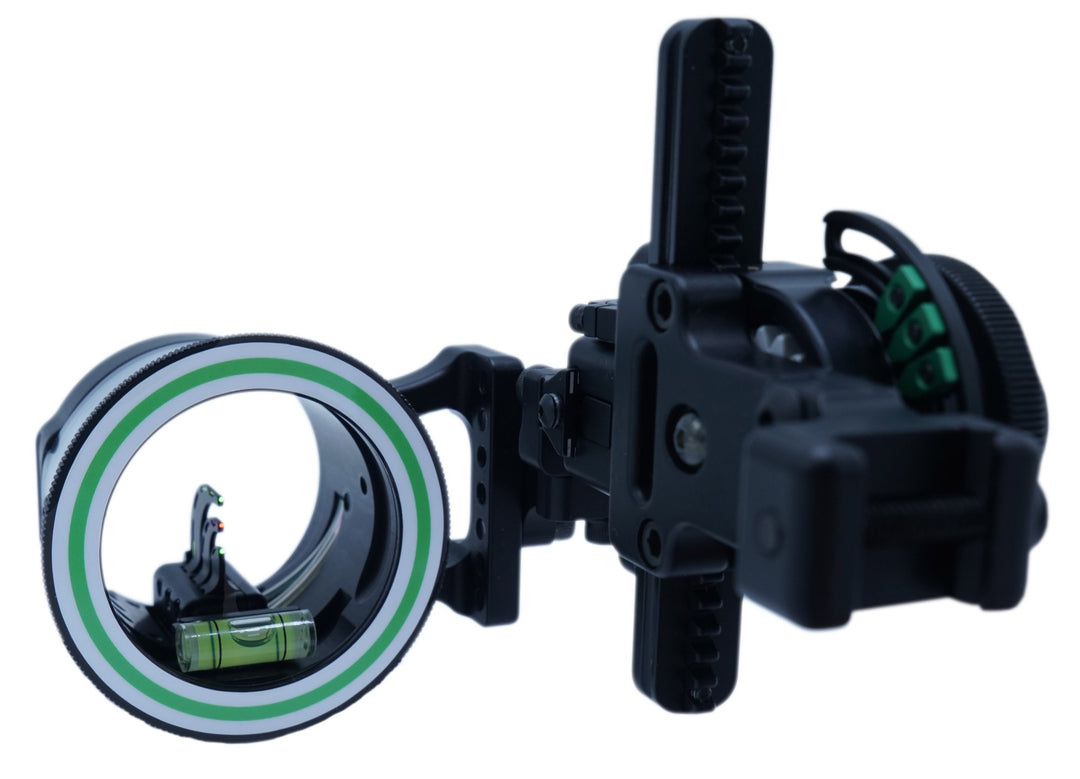
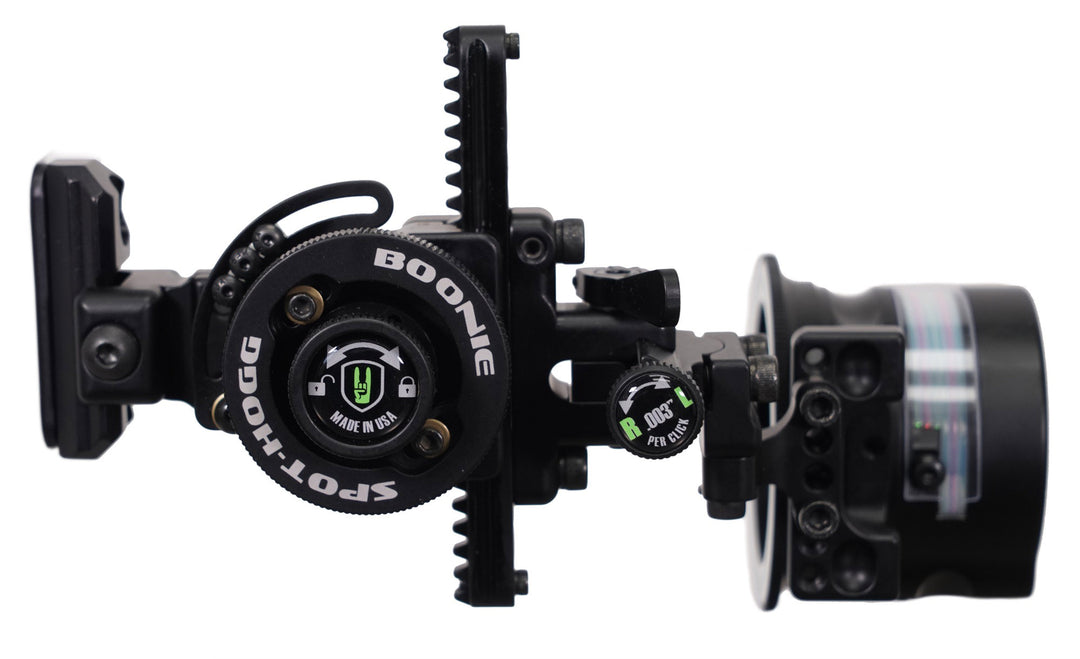
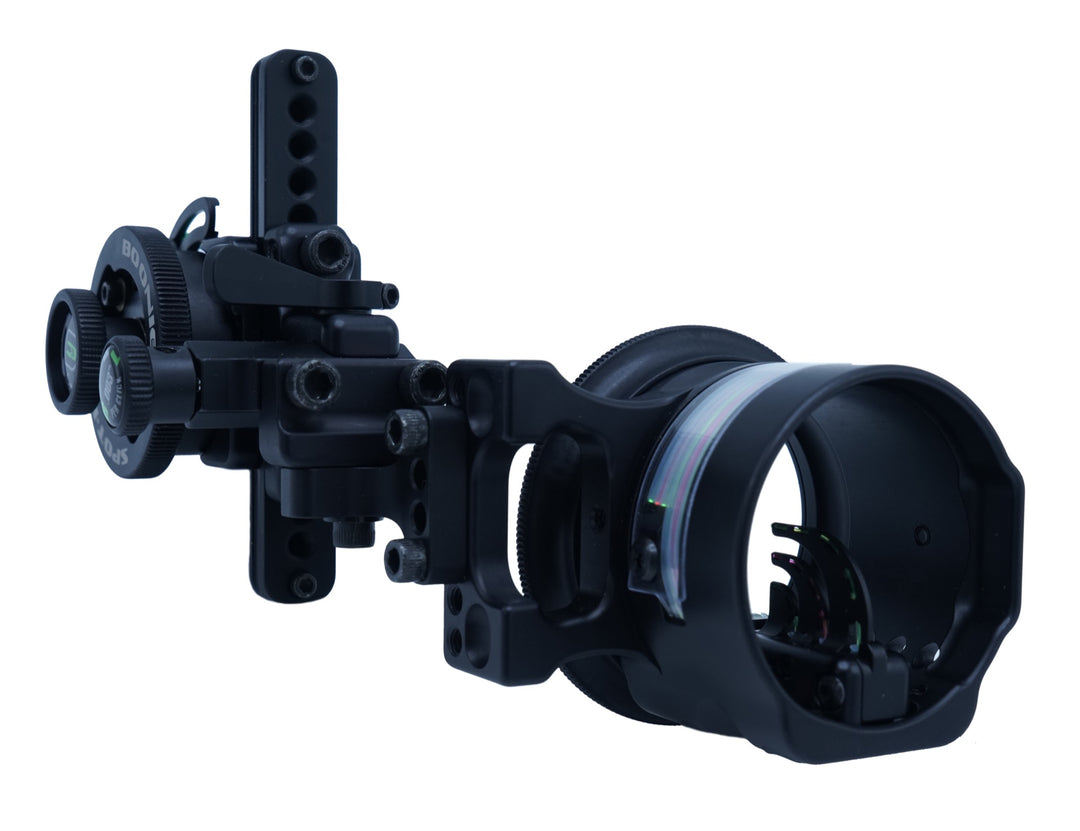
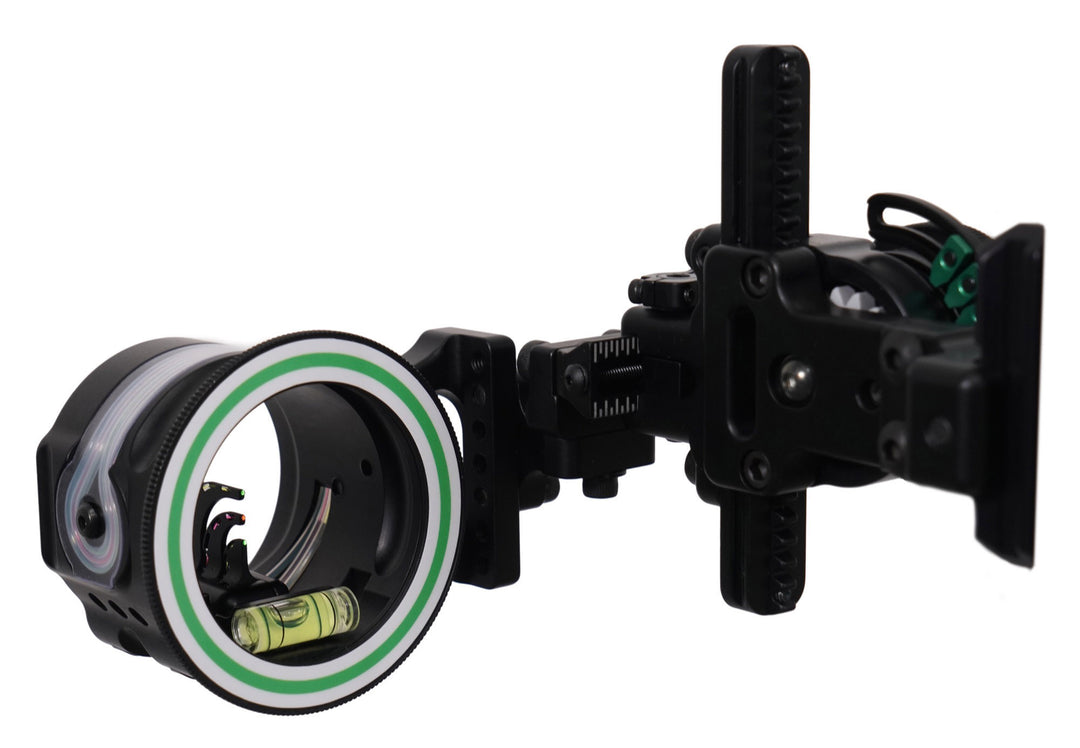
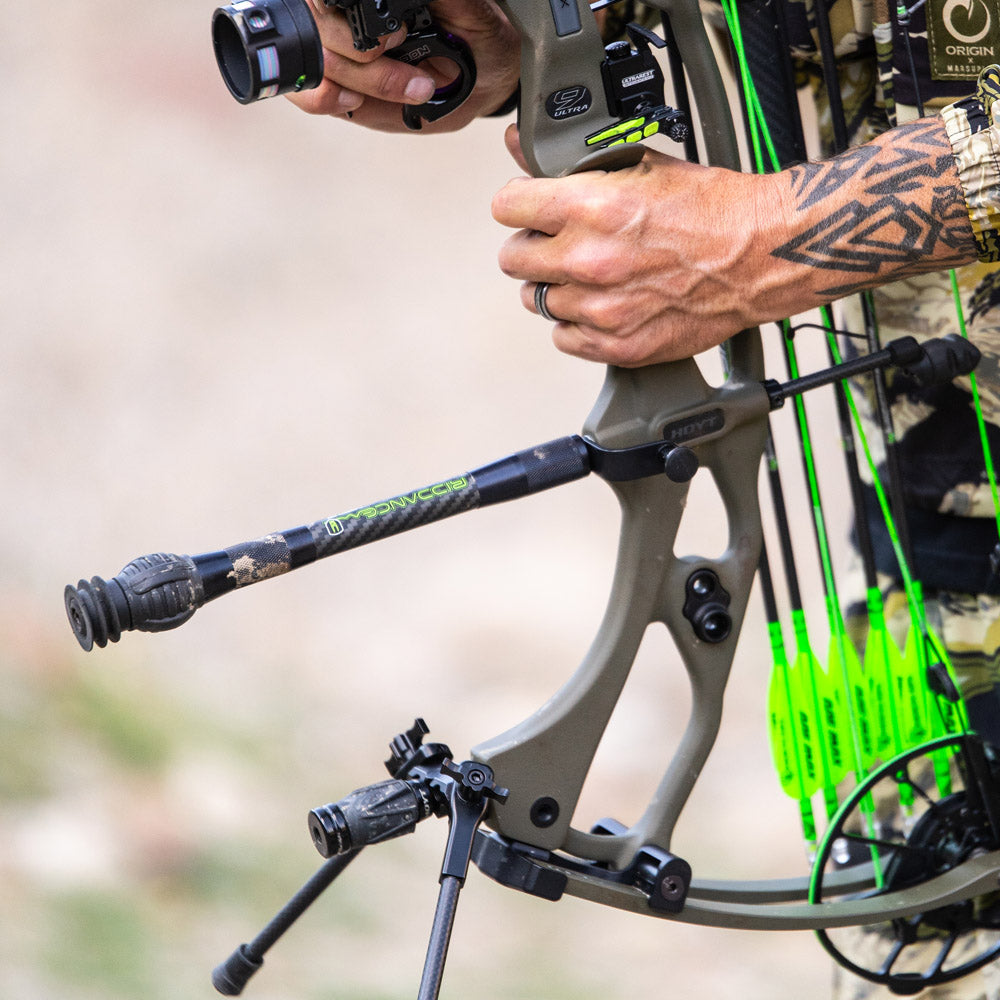
The Spot Hogg Boonie Triple Stack with Picatinny mount sits closer to your riser than a traditional dovetail or hard mount, so the sight loads into your bow’s balance instead of hanging off the front. Three individually micro-adjustable vertical pins give you a multi-pin sight picture without horizontal pins crossing the target. The Picatinny rail bar locks into bridge-lock and rail-equipped risers with two screws and no extra hardware.
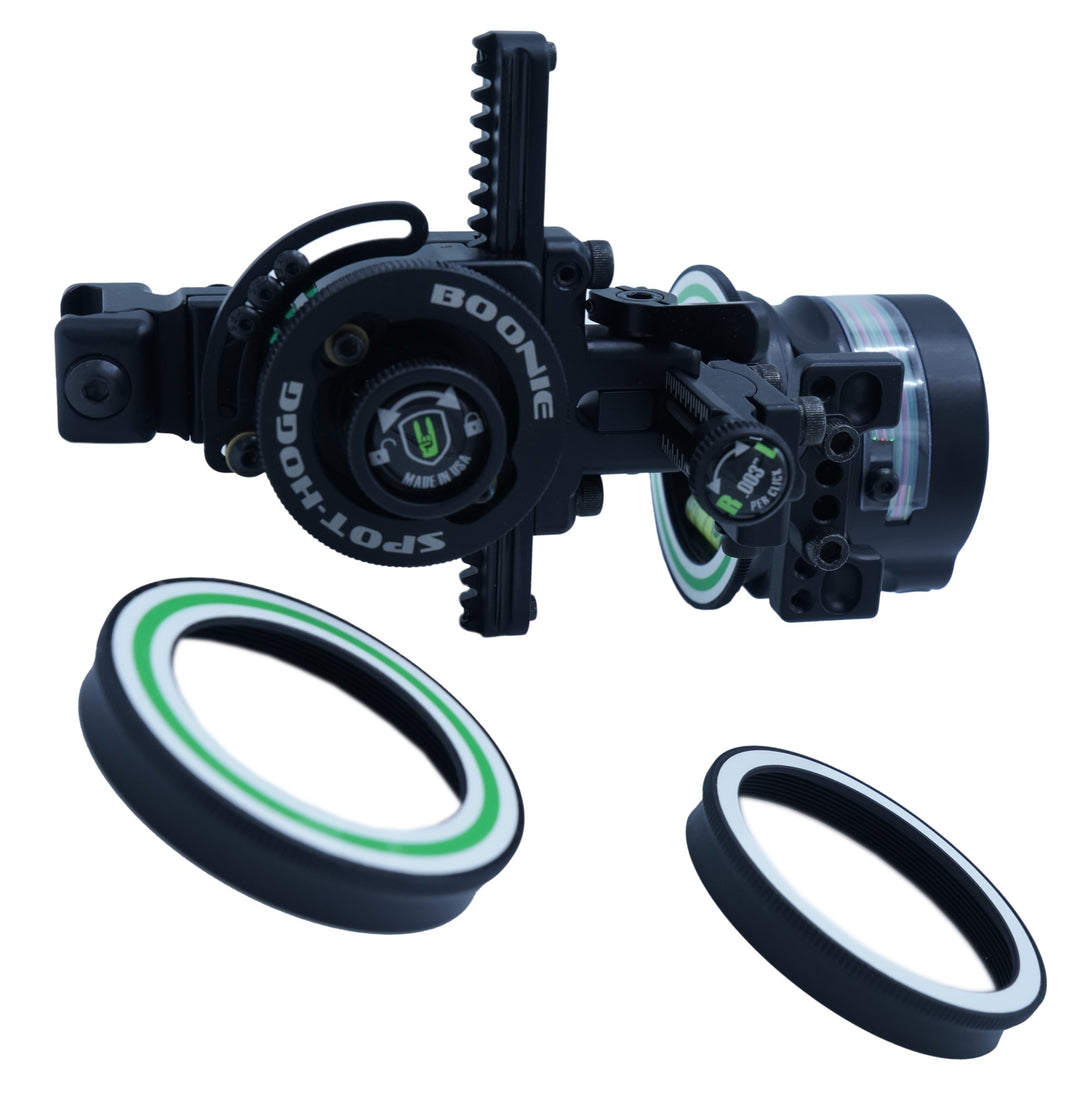
Each Boonie Triple Stack ships with three individually adjustable yardage indicators, an “Always-Up” Solar Fiber Optic Wrap that gathers light from any angle, and full first, second, and third axis adjustments. The Nock On Edition includes three Nock On MRT Ring sizes in white and Flo green for custom peep alignment plus a 120-yard sight tape double pack. The sight comes in .019 pin diameter, right or left hand, and the modular bar swaps to a hard mount or dovetail if your setup changes.
These sights ship pre-set to John Dudley’s build specifications out of the package, so the rail position is already aligned for his peep and nocking point reference. Archers on Archery Talk who’ve switched from a Fast Eddie or a horizontal pin sight to the Boonie Triple Stack consistently call out the upgraded wheel lock and cleaner sight picture. Customer reviews describe the triple stack as the cleanest pin housing they’ve shot, since one vertical pin blocks less of the target than three or five horizontal pins.
Core Benefits of the Boonie Triple Stack Picatinny Sight
- Closer-to-Riser Mount: The Picatinny bar sits flat against the riser instead of stepping out like a dovetail or extended hard mount, so the sight mass loads into your bow’s balance and the lever effect on torque drops
- Three Individually Adjustable Pins: Each vertical pin moves independently to your exact yardages, so you can set a fixed multi-pin configuration or use the dial to extend beyond your top pin
- Modular Sight Base: Swap the Picatinny bar for a hard mount or dovetail bar without replacing the sight, and any current Spot Hogg housing drops onto the Boonie body
- Removable Yardage Wheel: Swap dial wheels between arrow setups (hunting versus 3D versus target) without re-tuning the sight, and lock down with the inset true-lock knob
Boonie Triple Stack Picatinny Sight Features
Picatinny Rail Bar
The Picatinny bar runs flat against the riser instead of stepping out like a traditional dovetail or extended hard mount. This pulls the sight mass closer to the bow’s center of balance, which drops the lever effect on your grip hand and steadies your hold at full draw.
Two screws mount the bar to the Picatinny rail on your riser. Depending on your scope housing and hand orientation, you may need to flip the dog-leg bracket so the scope sits closer to or further from the riser, then run the two screws back through the housing.
Triple Stack Pin Housing
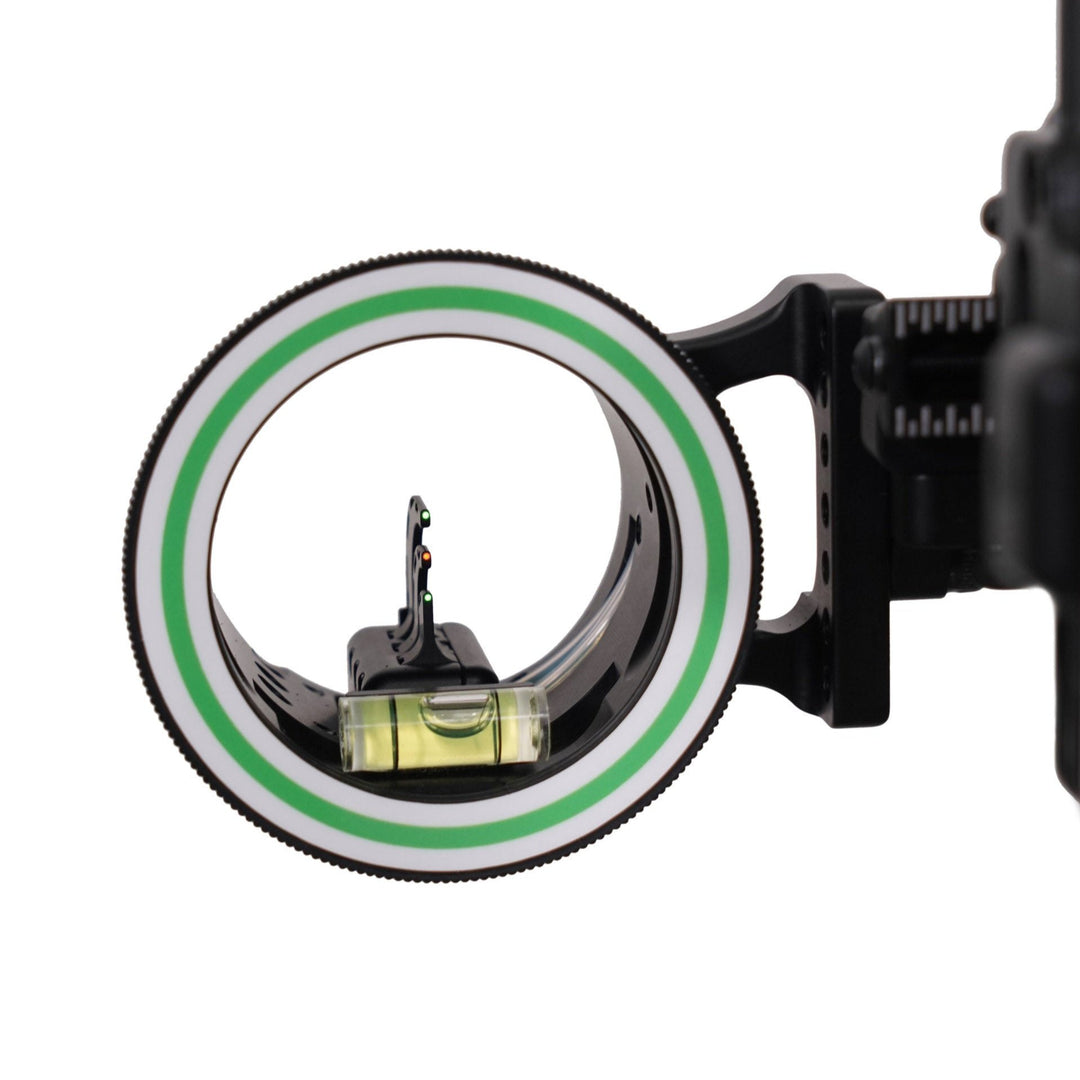
Three vertical fiber-optic pins stack inside the housing, and each pin adjusts independently with its own micro-adjustment. The Triple Adjustable Indicators on the dial match each pin to your sight tape, so once you’ve set your pins and sight scale, you can roll the dial to any yardage and use whichever pin lines up with the needle.
The triple stack is the only Boonie housing with individually adjustable pins. The double pin housing has a fixed gap between the two fibers, so if you want full control over where every pin sits, the triple stack is the way to get it.
Always-Up Solar Fiber Optic Wrap
The housing wraps the pin fibers with a solar collector that gathers light from any angle, not only from above. This keeps the pins lit in deep timber, on cloudy days, and in the last few minutes of legal shooting light when traditional fiber wraps go dark.
True-Lock Knob With Removable Wheel
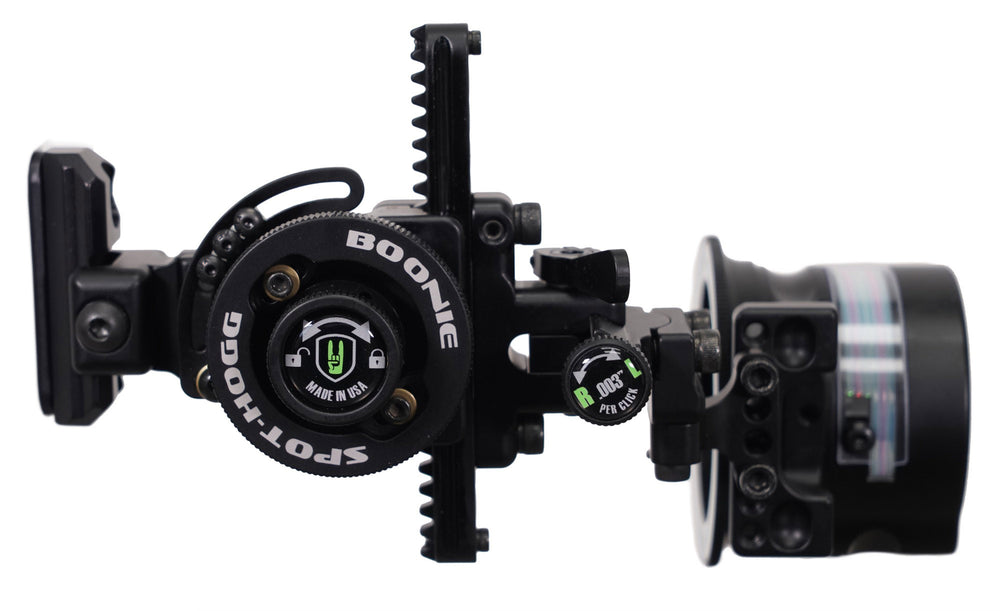
The inset lock-down knob holds the dial firm during the shot but backs off without losing precision when you need to adjust on the fly. The adjustable tension lets you set how tight the dial locks down based on how easy you want it to bump or how secure you want it locked.
The wheel itself is removable. Swap it for a second wheel with a different sight tape if you shoot hunting arrows in the fall and target arrows in the summer, and you won’t have to re-tune the sight between setups.
Three-Axis Adjustment
First, second, and third axis adjustments dial in pin-to-bubble alignment across distance and angle. The redesigned second axis lets you level the rail first, then the scope housing, which keeps your pins tracking accurately at extended ranges.
Set the third axis at full draw with the sight on the bow, not in a bench jig. Bryce at Spot Hogg, the engineer who designed the triple stack housing, has confirmed this directly on Archery Talk: adjust until you can’t see the sides of the pins at full draw, then shoot up and down hills to confirm your point of impact tracks correctly.
Boonie Picatinny Sight Technical Specifications
- Mount Type: Picatinny rail (closer-to-riser alignment)
- Pin Configuration: Triple Stack with three individually micro-adjustable vertical pins
- Pin Diameter .019
- Hand: Right or left
- Weight: About 10% lighter than the Fast Eddie XL line (triple stack housing weighs more than double pin housings across all Spot Hogg sight bodies)
- Axis Adjustments: First, second, and third
- Sight Tape: 120-yard double pack included (Nock On Edition)
- Included Accessories: Three Nock On MRT Ring sizes in white and Flo green for custom peep alignment
- Housing Compatibility: All current Spot Hogg sight housings (single pin, double pin, triple stack, 5-pin)
- Modular Bar: Swappable for Picatinny, hard mount, or dovetail
- Country of Origin: USA
Boonie Triple Stack Performance
This sight is built for hunters who want one bow sight that handles fast spot-and-stalk shots and dialed long-range work without compromising on either.
The Picatinny mount keeps the sight tight to the riser for cleaner balance, the triple stack gives you three referenced distances without re-ranging, and the modular bar means the same Boonie body moves between bows or converts to a different mount style if your setup changes.
Frequently Asked Questions About the Boonie Triple Stack Picatinny Sight
How does the Picatinny mount compare to dovetail or hard mount?
The Picatinny bar runs flat against the riser, pulling the sight mass closer to the bow’s center of balance. A dovetail steps the sight out for extended reach (useful for long-range target work), and a hard mount sits at a fixed position with no fore-aft adjustment.
For bows with a Picatinny rail on the riser, the Pic Mount is the cleanest integration. The closer-to-riser position improves balance, drops the lever effect on your grip hand, and keeps the sight tight to the bow for backcountry travel.
Can I adjust each pin individually on the triple stack?
Each vertical pin has its own micro-adjustment, and the Triple Adjustable Indicators on the dial let you match each pin to your sight tape. You can set the top pin at one yardage and the bottom two as backup references at wider distances, or stack them tight for fixed-pin hunting inside 50 yards.
The Spot Hogg engineer who designed the triple stack housing has confirmed on Archery Talk the triple stack is the only Boonie configuration with individually adjustable pins. The double pin housing has a fixed gap between the two fibers.
How do I set my third axis correctly on the Boonie?
Mount the sight on your bow, draw, and look through your peep at the pins. Adjust the third axis until you can’t see the sides of any of the three pins at full draw. Then shoot up and down hills and confirm your point of impact tracks with your dialed yardage.
Spot Hogg warns against setting third axis on a bench jig. Setting it on the bow at full draw matters because the angle of your bow and your grip pressure affect how the pins sit relative to your line of sight. Pro shops that level the sight in a jig and call it done skip the most important step.
Should I shoot the triple stack as a fixed multi-pin sight or as a slider?
Both work, and the right answer depends on how you hunt. Set the three pins at fixed yardages like 20/30/40 and leave the dial parked if you want a clean fixed-pin sight for whitetail stand hunting. Use the slider for longer shots when you have time to range and dial.
For spot-and-stalk situations where shots can develop fast, run the triple stack like a slider with two or three set reference points so you’ve always got a backup hold without re-ranging. Visibility through the vertical stack also stays cleaner than a 5-pin horizontal when shots stretch past 50 yards.
Can I swap the housing or sight bar later?
Yes to both. The Boonie base accepts every current Spot Hogg sight housing (single pin, double pin, triple stack, 5-pin), so you can buy a head separately and swap it onto the same Boonie body. The sight bar is also modular: pull the Picatinny bar and swap in a hard mount or dovetail bar without replacing the sight.
Archers on Archery Talk report buying base-only Boonies and pairing them with housings they already owned from older Spot Hogg sights, which saves money if you’re already in the Spot Hogg ecosystem.
How heavy is the Boonie compared to the Fast Eddie XL?
Spot Hogg’s published spec is about 10% lighter than the Fast Eddie XL line. S&S Archery’s independent review weighed a Boonie at 13.4 ounces versus 14.2 ounces for the XL. The savings are real, but they’re smaller on multi-pin housings (the triple stack housing adds about two ounces over the double pin housing across the Spot Hogg lineup).
If weight was your only reason for switching, the savings are modest. The bigger gains are in the redesigned lock-down knob, the swappable wheel system, the three-axis adjustment, and the modular bar.
Is the Boonie Triple Stack a good fit for newer archers?
The triple stack works for new and experienced archers, but the dial-and-pin system has a learning curve. Getting in the habit of always knowing where each of your three pins sits at any dial position takes practice, and ranging-and-dialing is a different rhythm than picking a pin on a fixed sight.
For a newer archer, the Boonie’s three pins still function as a fixed multi-pin sight if you leave the dial parked. As you build confidence with ranging and dialing, you can start using the slider system for longer shots and keep the pins as backup references for fast field situations.